

The Food Standards Agency (FSA) estimates there are around 2.4 million foodborne illnesses every year across the UK. This is why, for food processors, every surface that comes into contact with products and ingredients matters, including the pallet
Through a long-standing partnership, we are incredibly proud to be the exclusive UK supplier of Cabka’s range of hygienic plastic pallets. These innovative solutions are the result of years of refinement and we firmly believe they are the best in the marketplace. This article explores why.
What are hygienic pallets?
Hygienic pallets are designed for environments where cleanliness is absolutely paramount. They have completely smooth and sealed surfaces, with the rib structure that gives the pallet its strength hidden inside the pallet. As a result, there are no open pockets, nooks or crannies for dirt, debris or bacteria to collect and hide.
As they are smooth, they are particularly easy to clean, either manually or in an automated pallet wash, and they also dry consistently. That makes them a piece of equipment you can build a Good Manufacturing Practice (GMP) process around. For more information on this, you can read our hygienic pallets Q&A.
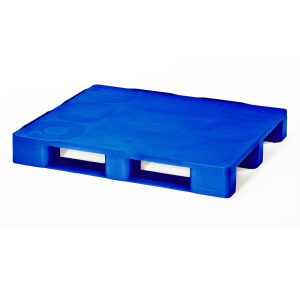 Why plastic pallets are superior
Plastic pallets are the obvious choice when it comes to hygiene, consistency and repeat use. Unlike wooden pallets, they do not absorb moisture, shed splinters or harbour pests or bacteria, and are not held together with nails. This is why wooden pallets are rarely allowed in high-care production areas. It’s the same story in automated warehouses, where a pallet with consistent dimensions and weight keeps the system running efficiently. And it doesn’t end there. Plastic pallets are more robust, more sustainable, last far longer, and are more efficient for exports. You can compare the two in more detail in our guide to wooden pallets vs plastic pallets.
Our partnership with Cabka
Cabka is a world-leading manufacturer of plastic pallets and pallet boxes, and the company has designed some of the most widely used hygienic pallets in the industry – and we are proud to be their exclusive UK supplier.
However, our relationship runs deeper than that. We also partner with Cabka on recycling. Since 2019, we have recycled more than 3,000 tonnes of plastic through our pioneering recycling scheme. After collecting the end-of-life plastic pallets and boxes, we transport them to Cabka’s facility in Belgium, where they are turned back into new products.
What sets the Ultimate Hygienic Pallet apart
On the surface, many hygienic plastic pallets look alike. However, the devil is in the detail – and it is those details that play a deciding role in how long the pallet lasts and how long it stays hygienic.
Chamfered runners
Cabka’s hygienic range of pallets features chamfered runners. This means the edges are angled rather than square. Many cheaper alternatives have straight, square-edged runners. As a result, when an operator pulls a pallet truck back out, the forks catch on that square edge and drags the pallet with them.
That might sound relatively minor, but it can happen many times a day. Each drag can scuff and chip the plastic, and every damaged surface is somewhere bacteria can hide. Chamfered runners let the forks slide out cleanly, so the pallet stays put, stays intact and stays hygienic for longer.
Smooth underside with fewer places for bacteria to fester
When it comes to a high-quality hygienic plastic pallet, it’s not just the top deck that needs to be clean. Unlike many cheaper options, the Cabka hygienic range has a smooth, sealed underside as well, with a limited number of areas where bacteria can settle and grow. Fewer crevices means faster, more reliable cleaning and drying. This provides food processors with more confidence when it comes to ATP swab testing and audits.
An original design that continues to evolve
Cabka’s hygienic pallet is an original design, not a copy. Over the years, we have seen first-hand how the company has developed and further refined the pallets in response to what food manufacturers need. It is the pallet others try to imitate, but an imitation rarely includes the level of detail, innovation and precision that make the original so good in the first place.
Why our hygienic pallets cost more
We cannot lie; there are cheaper hygienic pallets available. However, in this case, a lower price almost certainly means lower quality – a square-edged design, a rougher finish, and a pallet that wears quickly once it is being used on a daily basis.
Our hygienic plastic pallets are built to last for years. Many of our customers – including some of the UK’s leading food processors – are still using the hygienic pallets we supplied more than ten years ago. Beyond longevity, you’re paying for the construction and design features mentioned above. An undamaged pallet stays clean, which protects your product, your audits and your reputation. Over its working life, that makes it the lower-cost choice.
Hygienic plastic pallets for food processing
Hygienic plastic pallets for food processing need to cope with raw ingredients and frequent washing, as well as chilled and frozen environments, plus strict food safety audits. Where pallets may come into direct contact with food, standards such as the BRCGS Global Standard for Food Safety often call for virgin-grade plastic to guarantee material traceability. Our food-contact hygienic pallets are made from virgin HDPE.
Colour is just as important. Many food manufacturers use colour-coding to separate different areas, products or stages of production. Our hygienic range is available in seven single colours from stock.
We’ve seen the difference this makes first-hand. One of the UK’s leading chicken product manufacturers uses our white Cabka Hygienic 1210 3R pallets in its microwave tempering tunnel, with the pallets going through automated washing between uses. Find out more in our guide to pallets and pallet boxes for food processing.
A closer look at the Cabka hygienic range
The range comes in two sizes – UK (1200mm x 1000mm) and Euro (1200mm x 800mm) – on runners or nine feet.
• Cabka Hygienic 1210 3R
• Cabka Hygienic 1210 5R
• Cabka Hygienic 1210 9F
• Cabka Hygienic 1208 3R
• Cabka Hygienic 1208 9F
Optional extras include edge lips, RFID inserts and screen-printed branding or ID.
Find the right hygienic pallets for your operation
At goplasticpallets.com, we understand that every food processing operation is different, so make sure you discuss your requirements with our expert team. We will ask the right questions about your processes, cleaning regimes and handling equipment, before recommending a hygienic pallet that ticks all of the boxes.
Call 01323 744057 or email sales@goplasticpallets.com today


