 Managers of industrial plants face an ongoing challenge of optimising processes within the factory to save time and reduce overall costs. Research shows that 81% of UK manufacturers are willing to invest in new digital technologies to boost productivity, but the answer could be much simpler than that. Here, Nathan Ford, national industrial manager at FEIN, manufacturer of premium quality power tools and accessories for the metals sector, discusses how the correct specification of power tools can help improve efficiencies and lower overheads in factories.
Lowering total cost of ownership
With strict budgets to adhere to, industrial managers are sometimes forced to purchase lower priced machines in order to save costs. However, using cheaper machines which are not suitable or do not have the necessary power for a particular application can dramatically halt efficiency and over the lifetime of the tool, can also increase total costs due to downtime and penalties for missed deadlines. Taking the time to carefully consider the application and select an appropriate power tool can, therefore, result in increased efficiencies, reliability and lower overall annual tool costs.
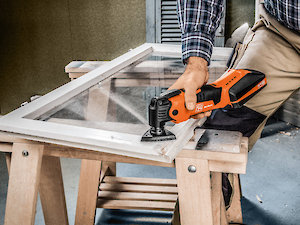
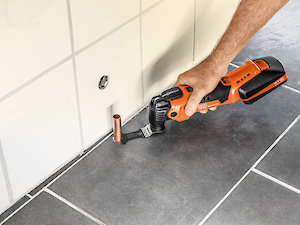
It is also important to look at specialist applications in more details, such as tapping. In this instance, the correct specification of tool can remove the need for additional manual work processes providing a reduction in the time spent on the job. It is also possible to specify programmable production tools which can incorporate a number of sequences into one tool, removing the need for multiple tool use. An investment in a tool that offers numerous multifunctional attachments which will again lead to a reduction in the number of tools required to complete a job.
 Collaboration is key
Collaboration between a manager of an industrial plant and a power tool manufacturer is crucial when it comes to improving the process of specifying the correct products. The two must work in unison effectively, with the manufacturer taking the time to fully understand the requirements and acting as a consultant to ensure an overall solution is provided.
Discussing in detail each individual application enables a manufacturer to assess the current processes in place and advise on how to improve. Whether it is a more powerful tool which speeds up the process to increase the volume of work, or a lower vibration tool to reduce the amount of fatigue placed on the operator, the manufacturer will be able to select a product that suits the requirements, ultimately lowering the cost of production and saving valuable time.
Putting this into practice
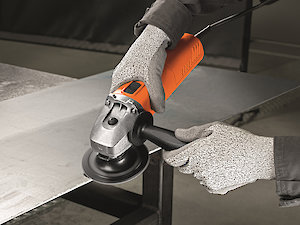
A first-hand example of the positive impact of collaborating with a manufacturer to improve the tool specification process was seen in our work with Calder Sheetmetal, a fabricator based in West Yorkshire. In this particular case, the company was having serious issues with the robustness and longevity of its angle grinders.
In an attempt to solve the issues, Calder Sheetmetal contacted the FEIN team, seeking a more reliable product. The first step for us was to get a full understanding of the application – on this occasion, deburring and cutting – and to ascertain exactly what was going wrong.
Whilst these tools – manufactured by a FEIN competitor – were relatively cost effective to purchase initially, the fact that Calder Sheetmetal had to continually repair and replace them was leading to mounting costs for the company. However, through working closely with our specialist consultants, the problem was rectified and we selected an angle grinder powerful enough to carry out the application whilst providing maximum robustness and service life.
Collaboration involves more than assessing the requirements and recommending a product, however, and one of our consultants visited the site to perform a free demo of the tool. This is an important part of the process which allowed the manager to see, first hand, the performance of the tool, with any queries answered there and then by an expert.
In stark contrast to the weak performance of the grinders that Calder Sheetmetal had previously used, which were failing, sometimes within weeks of purchase, we provided the company with an initial eight angle grinders which have all lasted over a year and a half so far without failure. Our team has continued to work closely with the manager resulting in significant total cost savings.
 Achieving improved industrial efficiency
Overall, it is clear that working in collaboration with power tool manufacturers can result in improved industrial efficiency. Manufacturers should be an extension of the team, working with those within the factory to achieve the same objectives. A close relationship will ensure that the correct tools are being used for each individual process. What’s more, choosing a provider that delivers a high level of overall service will ensure that any issues are quickly resolved, meaning work can be carried out to highest possible standard with minimal downtime.
For more information on improving the specification of power tools, visit: https://fein.com/en_uk/ or to arrange a site visitation and consultative product offering, email: FGB_demo@fein-uk.co.uk.