 Unavailability of mission-critical assets in any warehousing environment can create enormous problems – from increased labour costs to negative impacts on productivity. Julian Adams, Managing Director at Apex Supply Chain Technologies Ltd, examines the issue and offers solutions.
The term ‘mission-critical asset’ can be somewhat misleading because, all-too-often, the assets in question are not regarded by their users as being mission-critical at all.
Handheld scanners, radios, rechargeable batteries and so on are often misused, mislaid, not returned or not recharged precisely because the user fails to see the bigger picture.
And by bigger picture, I mean that while one shift might have finished, another is about to start and these employees will need to use the same mission-critical assets – but won’t be able to because they either cannot find them or they are not ready for use.
This narrow mentality has an enormous impact on productivity, which is only now beginning to be understood, because the impact of poor asset management goes far beyond merely the frustrations of the next shift.
For a start, the search for, or even the checking in and out of critical assets, such as scanners, takes workers away from their primary areas of responsibility. When supervisors and managers become involved in searching for missing assets, the effect is even more profound.
Ultimately, this situation delays jobs and services. When workers can’t perform their assigned responsibilities on a timely basis, orders are late to be delivered or scheduled maintenance is not undertaken. All of this elevates labour costs and overtime, as extended hours are introduced to deal with the backlog, often at higher hourly rate levels.
In addition, penalty clauses or additional costs can be triggered. When jobs and services are delayed, additional costs over and above direct labour, including costs to expedite outbound shipments, such as couriers or even private flights, may be incurred, just to get the order to the customer on time.
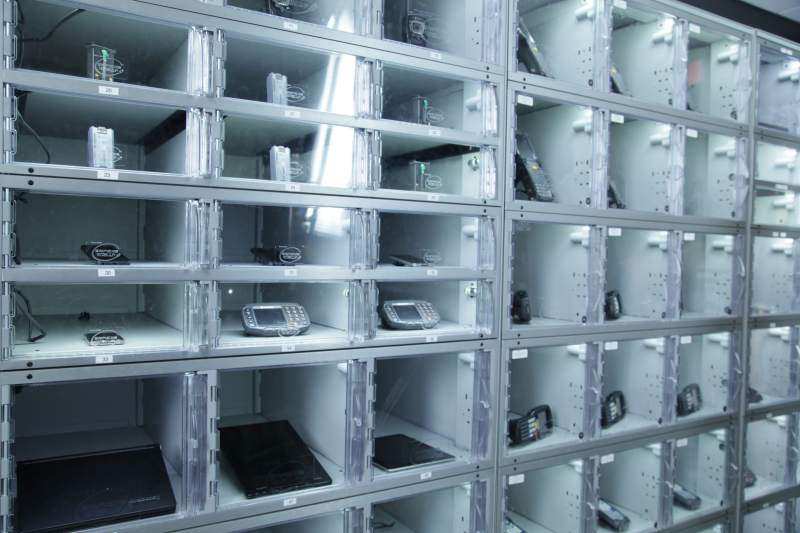 In some instances, delays can be directly attributed to the lack of availability of handheld data terminals and barcode scanners due to batteries not being recharged.
What is becoming abundantly clear is that the direct and indirect impact on operations and financial performance of inadequate or ineffective controls for mission-critical assets should no longer be considered as either trivial or inconsequential.
In terms of costs, if 20 asset-users are being forced to make a 15-minute trip each working day to locate the tools they need to do their job, this equates to more than 1,300 lost hours every year*.
Handheld wireless barcode scanners cost anything between £500 (€600) and £3,000 (€3,600) each with batteries costing circa £200 (€240) each. Two-way radios cost circa £3,000 (€3,600) each. When all of these costs, both direct and indirect are added up, large facilities can be losing several tens if not hundreds of thousands of pounds (Euros) every year in both lost assets and time.
What is clear is that traditional methods of managing these assets, such as central distribution points or ‘stores’, manual record-keeping and self-service stations are just not up to the job.
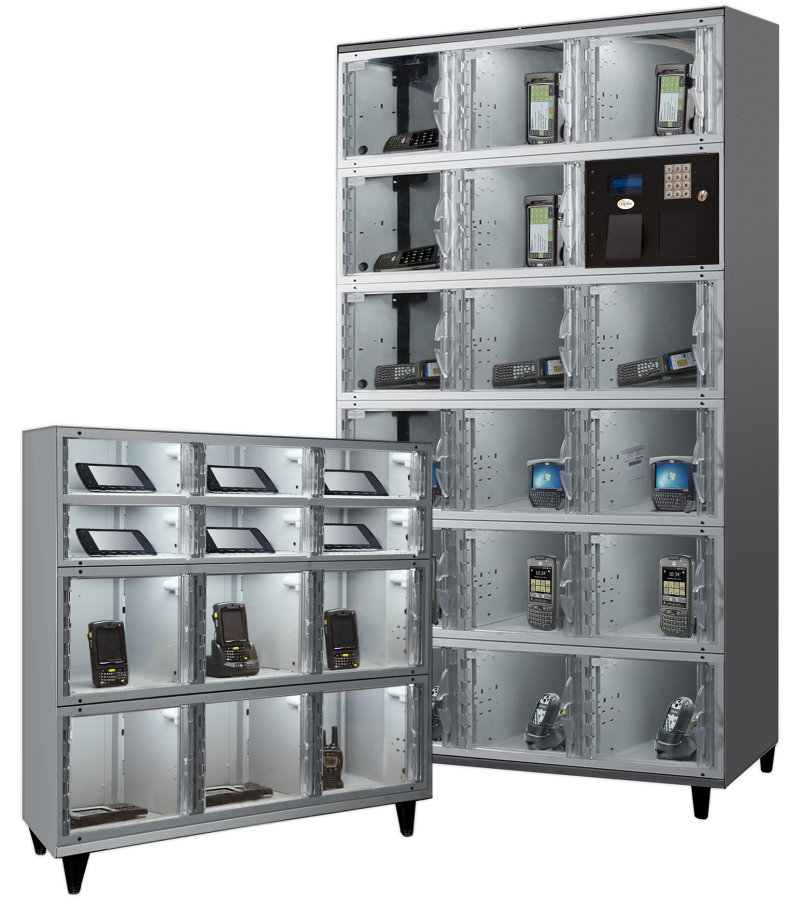
So what is to be done? The answer may lie in a new generation of cloud-based automated locker systems, which can be located close to the point-of-use, eliminating ‘walk-and-wait time’.
This sort of system, like Apex Supply Chain Solutions® AXCESS™ lockers, controls access to the assets (who gets what) ensuring the correct asset is given to each worker. Where health and safety is a key issue, such as where workers are required to wear specific PPE equipment, this is a major plus.
Crucially, the automated locker system can manage the asset to pre-determined standards to ensure compliance with regulations, quality and safety standards. A good example is the recalibration of tools and gauges, which cannot be checked out again once they have reached their calibration limit.
 What’s more, an electronic audit trail is available for all transactions, which identifies not only when an asset has not been returned, but also when it has reached its calibration or certification limit.
With all data held in the cloud, reports can be easily viewed, virtually anywhere, on a laptop, tablet or smartphone, which provides management with answers to simple, but important questions, such as who has an asset, when was it checked out and what job was it used on?
Historically, process improvement and cost-saving initiatives have been focused on areas surrounding core activities, such as production and service delivery. Mission-critical assets have remained a hidden cost for businesses that only now is beginning to be understood.
Senior management are placing increasing emphasis on fixing these issues and their impact on productivity. Cloud-based automated locker systems are the answer.
For more information about Apex Supply Chain Technologies®, please visit www.ApexSupplyChain.com/gb, email info.eu@apexsupplychain.com, or call 0800 840 4776
*Calculation based on 261 working days in a year.