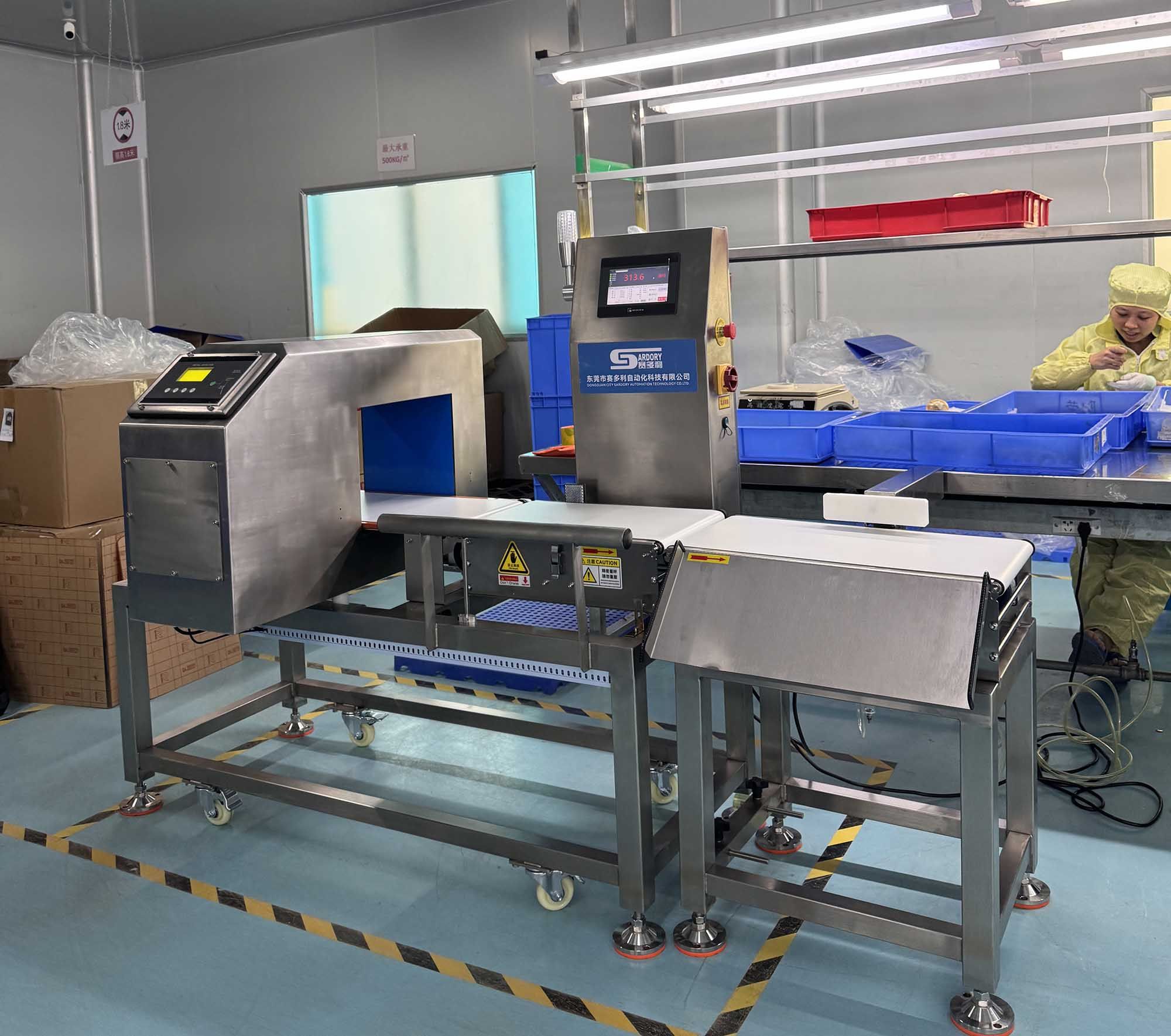
Metal detectors and checkweighers have long been staples in quality control, but their integration into combined systems marks a significant leap forward in manufacturing efficiency
What started as separate tools for spotting metal contaminants and verifying weights has evolved into streamlined units that handle both tasks at once. This shift began gaining traction in the late 20th century as industries like food and pharmaceuticals pushed for faster, more reliable inspections amid tightening regulations. Today, these combo systems are go-to solutions for dual-purpose verification, helping operators catch issues early without slowing down lines. If you’re grappling with space constraints, high rejection rates, or compliance headaches, understanding these systems can point you toward practical fixes that boost throughput and cut waste.
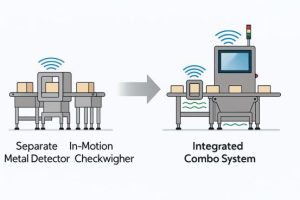
(Evolution of Inspection Systems)
Principles of Metal Detector-Checkweigher Systems Operation
These integrated systems work by merging the core mechanics of metal detection and checkweighing into a single workflow, often on one conveyor belt. Let’s break it down step by step to see how they tackle common production pitfalls like undetected contaminants or inconsistent weights.
First, metal detection relies on electromagnetic induction. A transmitter coil creates a high-frequency alternating magnetic field around the inspection area. As products pass through, any metal impurities—whether ferrous like iron or non-ferrous like aluminum—disrupt this field. Ferrous metals get magnetized, while conductive ones induce eddy currents that alter the field’s amplitude and phase. Receiver coils pick up these changes, and signal processors analyze them against presets. To handle “product effects” from moist or salty items that mimic metal signals, the system uses phasing techniques or multi-frequency scanning, tuning out false positives while flagging real threats.
Meanwhile, checkweighing uses load cells—sensitive strain gauges that measure force as weight. Products glide over a weighing platform of dynamic checkweighers, where sensors capture dynamic readings without stopping the line. Digital filters smooth out vibrations from conveyors or machinery, comparing the weight to predefined tolerances. If it’s under or over, the system notes it for action.
In a combo setup, these happen sequentially or overlapped: products enter via a buffer conveyor for spacing, hit the conveyor metal detector first (to avoid weight interference from metal parts), then the high speed checkweigher. A central controller synchronizes everything, using encoders to track positions and trigger rejections—pushers for heavy items, air blasts for light ones. Data from both feeds into logs for traceability.
Facing sync issues? Calibrate with test samples: run clean products to set baselines, then introduce known contaminants or weight variances to fine-tune. This can slash false rejects by addressing orientation quirks or speed variations, ensuring smooth operation even at moderate paces.
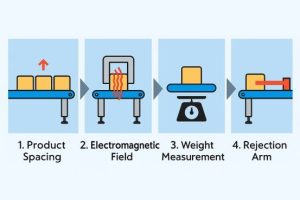
(step-by-step operation of Metal Detector-Checkweigher Systems)
Advantages Explored of Metal Detector-Checkweigher Systems
Combining metal detectors and in-motion checkweighers isn’t just convenient—it’s a smart way to address pain points like high costs, cluttered floors, and quality slips. Here’s how these systems deliver real value across different product types.
Space and cost savings top the list. Standalone units eat up room and budget for separate installs, wiring, and maintenance. Integrated designs pack everything into one frame, trimming footprint by a noticeable margin and sharing components like controls and rejectors. This means less downtime for servicing and lower overall expenses, especially in tight facilities.
Efficiency gets a big boost too. Products pass through once for dual checks, cutting handling time and reducing wear on goods. Automated rejection sorts issues separately—metal-tainted items one way, weight offenders another—streamlining rework. For variable products like wet foods or foil packs, flexible settings adapt without halting lines, minimizing bottlenecks.
Safety and compliance shine here. Metal detectors guard against shards from upstream machinery, preventing recalls and health risks. Automatic checkweighers ensure net weights meet legal standards, avoiding fines for underfills while curbing giveaway from overfills. Together, they form a robust critical control point, with data trails for audits. In regulated sectors, this dual layer builds trust and eases inspections.
Operational flexibility rounds it out. These systems handle diverse shapes, sizes, and packs— from loose powders to sealed trays—thanks to adjustable apertures and hygienic builds for washdowns. If moisture interferes, multi-frequency modes or learning algorithms adjust on the fly, solving detection dips in challenging environments.
Struggling with high rejects? Optimize by spacing products evenly and testing rejection timing; it often reveals simple tweaks like belt speed adjustments that reclaim good items without compromising safety.
Real-World Scenarios
In food and pharmaceutical lines, these combo systems prove their worth by nipping metal impurities and weight violations in the bud, often preventing costly downstream problems.
Take food processing: In dairy or bakery setups, where moisture and salts can trick detectors, integrated units scan for metal from broken mixers while weighing portions. For ready meals in foil trays, the system tunes for packaging interference, rejecting contaminated or light packs before sealing. This curbs recalls from metal bits in snacks or underweight poultry, with separate bins aiding root-cause analysis—like pinpointing a faulty upstream filler.
Pharma applications are equally critical. During tablet or capsule filling, customization dynamic checkweighers verify doses to avoid potency issues, while metal detectors catch shavings from presses. In cosmetics, they ensure creams or lotions hit weight specs without metal from pumps, supporting hygiene in washdown zones. Pipeline versions for liquids like sauces integrate seamlessly, diverting bad batches via valves.
A common fix for implementation snags: Start with a pilot on one line, monitoring data to adjust for product density changes. In high-speed meat lines, for instance, this reveals how to calibrate for fat content variations, dropping waste and upholding standards.
Future Trends and Integration Tips
As automation advances, expect these systems to get smarter with AI for predictive tweaks and IoT for remote oversight, forecasting issues like sensor wear before they disrupt.
Integrating one? Assess your line’s speed, product mix, and space first. Position it end-of-line for final checks, ensure vibration isolation, and train staff on interfaces. Regular tests with standard contaminants and weights keep it sharp, evolving your setup for long-term gains.
For more information, visit https://www.samegram.com/