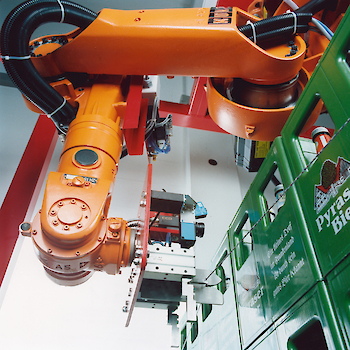
 It is apparent that post Covid-19, the UK manufacturing landscape shall never be the same, as business owners diversify their operational processes to address cost saving initiatives, and alleviate labour shortages aligned with social distancing measures and Brexit. Manufacturers are essentially preparing themselves for ‘business as un-usual’, quickly recognising the benefits that can be afforded through the implementation of robotics, and automated manufacturing principles. Though how are external factors driving change within UK manufacturing? Consider the one biggest influencer, the consumer. How are their needs diversifying, and in return driving change within the industry?
Consumer buying preferences have changed significantly over the last 10 years as the evolution of ecommerce, driven by an explosion in the availability of electronic devices; buy anywhere, at any time, has opened up a plethora of buying options that are simply not available on the high street. Consider mass customization – a manufacturing principle that combines flexibility and personalization of custom-made products, but with a lower unit cost you’d associate with mass production. Consumers want products now, and in a bid to remain competitive in what is a constantly diversifying and challenging marketplace, manufacturers must consider replacing manual processes, with automated technology.
Buying habits are not just limited to online marketplaces/retailers either. Consumer preferences extend to ‘brick and mortar’ SME’s (a ‘physical’ organization). The demand for materials warrants efficient manufacturing practices, that incorporate robotics and automation to satisfy that demand, which in turn afford businesses several proven benefits, such as:
- Competitive ability; leveraging technology to differentiate from competitors
- Speed of throughput; operational optimization
- Consistency; better production quality, and precise, reliable processes
- Cost savings; waste reduction, performance optimization (24/7, lights out etc.)
- Operational agility; reacting to consumer trends
Post COVID-19 we should consider that robotics is now viewed not only an operational supplement, but as a means of infection prevention and improving resiliency. Those businesses that managed to ride the storm that was COVID-19 and its associated challenges, such as lock down, and social distancing, are now realizing the value attributed to automation. Operational footprints are being transformed. Where once there might have existed a production line; workers stood shoulder to shoulder along a conveyor, there now appear collaborative robot cells, designed to work alongside humans. Upstream a palletizing robot stacks boxes, a simple process yet one that delivers a level of throughput essential to process continuity.
We talk about future proofing operations, and this is key to adopting robotics and automation. As localized lockdowns are introduced nationwide, and the threat of another severe outbreak of C-19 threatens, can businesses really afford not to automate? The answer is simply, no.
Identifying just where threats might exist within your supply chain, is the first step. If in an A, B, C, D process you lost C, how does B get to D? Move an operator from A to C, and the same conundrum exists, just elsewhere within your operations. This is a question that many manufacturers are asking and are ultimately turning to technology to help target vulnerabilities, essentially automation is supporting crisis management strategies across several sectors, at a time of adversity, the biggest challenge being labour scarcity.
Coupled with the increased expectation for faster order fulfilment, manufacturers are coming under increasing pressure to automate. Our exit from the EU looms which in turn presents several challenges, though also opportunity. It has been widely reported in the UK press that Brexit could stimulate local markets. If so, local demand could be the litmus test for many SME’s for whom automation has not featured within their business planning. Take into consideration the low cost labour that the UK have benefited from of historically, and the skills gap that is also growing. Some businesses could reach a fork in the road from which there is no return, if they do not embrace automation as an operational value add.
Manufacturers face increased demands to produce more products, and at faster rates. Those businesses that assign repetitive tasks to robots can utilize their workforce to manage more complex functions, boosting efficiency whilst establishing themselves as a progressive, dynamic supplier which can in turn be used as a USP when approaching prospective clients.
The benefits that automated robotic processes can deliver are vast and have been proven across several sectors over the years. However, the needs aligned with adopting automation are changing. The manufacturing area is diversifying, driven by external factors beyond our control. Having the ability to adapt quickly to these changing circumstances is key. SME’s must recognize that without automated processes, their future manufacturing capabilities won’t be enough to keep pace with either their competitors, or consumer demands.