Sustainability is now firmly on the agenda for manufacturers and industrial businesses.
Whether driven by legislation, customer expectations or ESG commitments, organisations are under increasing pressure to reduce waste, make better use of resources and demonstrate more sustainable ways of operating.
Much of the conversation focuses on the materials buildings are made from, or how much energy they use once they’re operational. But there’s another question that’s often overlooked: what happens when a building no longer meets the needs of the business?
Demolishing it isn’t a practical option, yet keeping it means operating from a building that isn’t quite fit for purpose. It may be larger than the business needs, too small to cope with current production levels or simply no longer configured in the most efficient way.
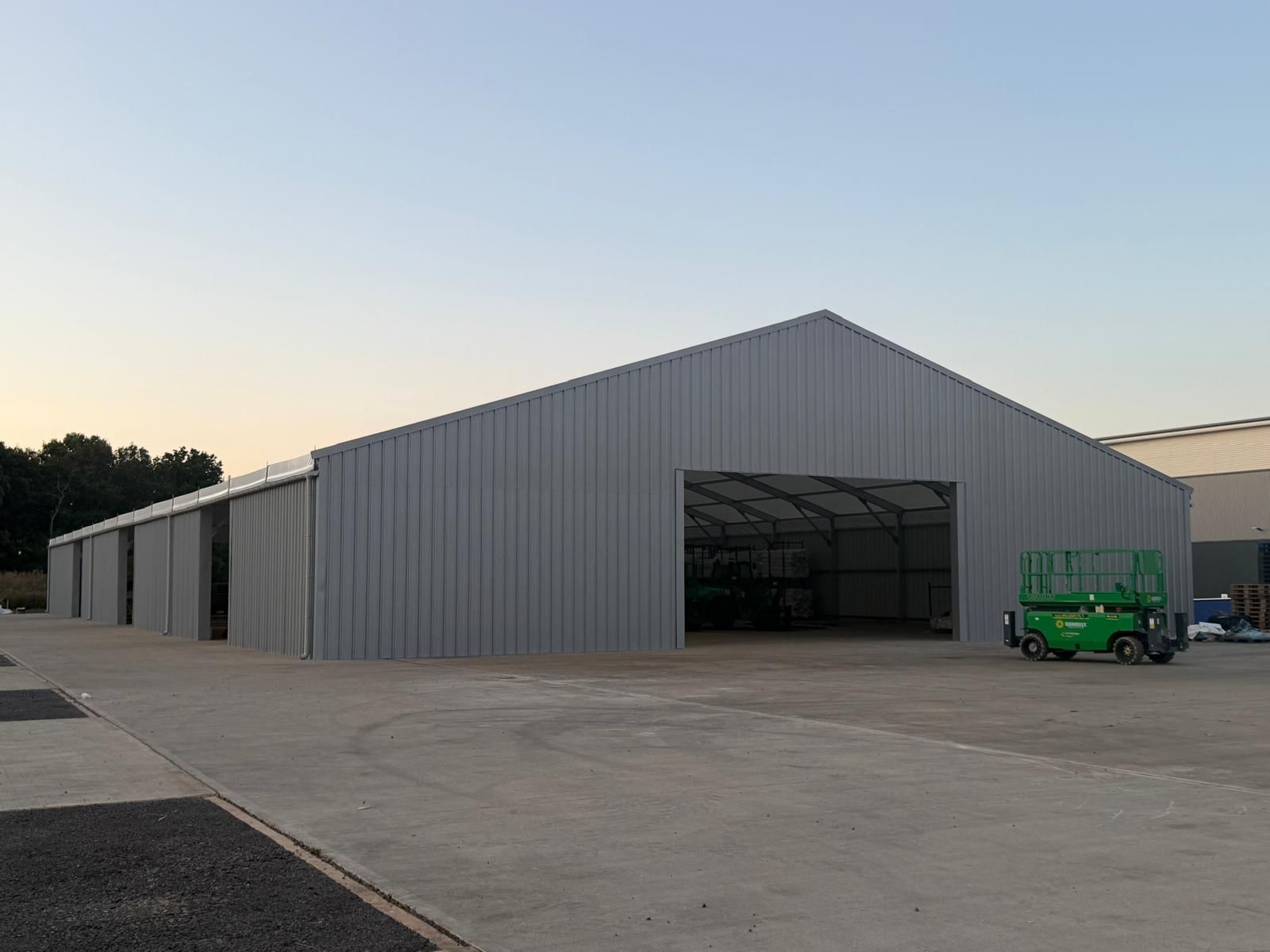
Temporary buildings offer a solution. Designed to be extended, reconfigured or relocated, they allow businesses to adapt their buildings so they can remain useful for longer, reducing waste and the need for unnecessary new construction.
Reducing the impact from day one
Sustainability doesn’t begin when a building opens; it starts with the way it’s constructed.
Traditional building projects often involve substantial groundworks, large quantities of concrete and extensive site preparation before construction can even begin, all of which use significant energy and resources.
In contrast, many temporary buildings can be secured directly onto existing ground surfaces using bolts or spikes, removing the need for purpose-built concrete foundations in many situations. Fewer materials, less excavation and reduced disruption all contribute to a lower-impact installation, while allowing businesses to create additional space much more quickly.
Right-size your space
Once it’s built, one of the simplest ways to reduce the environmental impact of a building is to make sure you’re only operating the space you actually need.
Permanent buildings are often sized to accommodate future growth, seasonal peaks or changing operational requirements. While that can provide reassurance, it can also mean heating, lighting and maintaining space that isn’t being fully utilised for much of the year.
With a temporary building, you can match available space to demand, extending, reducing and reconfiguring as many times as is needed, as operational requirements evolve.
A building installed to provide overflow warehousing today could later become additional production space, be moved to another part of the site or even dismantled and rebuilt at a completely different location. And where additional capacity is no longer needed, the building can simply be removed rather than becoming an underused overhead.
The result is a more efficient use of energy and resources, while avoiding the ongoing costs associated with maintaining unused space.
Making better use of materials
To be sustainable, a building doesn’t just use fewer materials, it makes better use of the materials already in circulation.
Unlike traditional construction, where many elements remain fixed within a single building for its entire life, Smart Space buildings are designed using interchangeable components. As buildings are extended, reconfigured or refurbished, those components can continue to be used across different structures.
By designing for reuse from the outset, fewer new components need to be manufactured and less material goes to waste.
Even when a customer no longer needs a building, that doesn’t mean it has reached the end of its useful life.
Through Smart Recycle, buildings are refurbished and repurposed so they can be used by another business. Rather than allowing perfectly serviceable structures to sit unused or become waste, they’re given a second life, extending the value of the original materials and reducing demand for new construction.
Sustainability has to make commercial sense
Any sustainable solution also has to make commercial sense.
For many businesses, renting provides a practical alternative to permanent construction. It creates the additional space they need without tying up capital that could be invested elsewhere, while still providing the flexibility to adapt, relocate or remove the building as requirements change.
And if that temporary building ends up becoming a long-term solution, Smart Space rental agreements become more cost-effective the longer they’re in place, with the option to purchase the building at any point during the rental period.
A different way of thinking about sustainability
The most sustainable buildings are those that continue to serve a useful purpose. That means designing buildings that can evolve alongside the businesses that use them, rather than becoming a constraint when requirements change.
Temporary buildings aren’t sustainable because they’re temporary. On the contrary, they’re sustainable because they’re designed to adapt, helping businesses make better use of both resources and their investment over time.
For more information, visit smart-space.co.uk
Visit our NEWS page for more industry updates