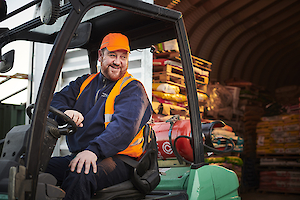
 Andy Kellett, National Accounts Manager for FLT at Calor, outlines why the business’s LPG and BioLPG fuel solutions are offering logistics and warehousing businesses a credible alternative to diesel, even when compared to electric options.
With the introduction of the new EU stage V standards for non-road mobile machinery, many forklift truck operations managers are looking to move away from diesel and run their fleet with a greener alternative. But, when it comes to picking the right fuel for those heavy lifters, it can be quite the task.
Is it time to convert your fleet’s energy from diesel?
To comply with the new standards, many diesel FLT manufacturers have reduced the amount of NOx emissions from their vehicles by lowering the combustion temperature using cooled exhaust gas, which dilutes the amount of oxygen in the combustion chamber. But this process has its disadvantages, as it leads to an increase in the amount of soot produced. To deal with this problem, the engine requires a diesel particulate filter (DPF) to prevent the soot from being emitted.
This DPF, however, needs to be recharged at regular intervals, which is a lengthy process performed once or twice a week. As a result, regular downtime has to be accounted for, in addition to dealing with a process that is time-consuming and repetitive. So, unnecessary hours are taken from the working clock.
 Is the only way electric? Absolutely not.
In contrast, electric FLTs are often perceived as using a renewable energy source, making them a green option. But, it’s important to remember that often this energy is taken from the National Grid, utilising fossil fuel-generation, from coal, for instance, being a likely part of this process.
When it comes to electric FLTs, their adoption as a mass market solution is not growing as fast as at first anticipated. The main reason behind this is the required investment in infrastructure to support them, including charging facilities, and the subsequent associated operational implications in downtime, because of battery cooling and charging. And, as there are so many tea breaks in the day for operators to wait for forklift trucks to power up, the pros of electric seem a little diluted.
 LPG and BioLPG from Calor
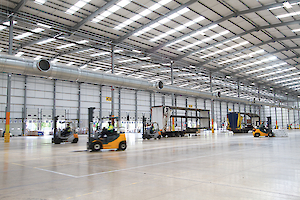
LPG-powered forklift trucks require minimal refuelling time and can run three times longer[1] than electric ones as they don’t require downtime for recharging. That means scheduling your day right, rather than arranging your day around recharging times.
As the leading provider of LPG in the UK, Calor has been providing businesses with reliable energy for 85 years. We have a commitment by 2040 for all of our energy supplied to customers to be renewable.
Although a relatively new entrant to the market, BioLPG is gaining traction within the materials handling sector. BioLPG emits 98 per cent less particulate matter than diesel and these emissions are lead and soot-free[2]. So, the only change needed is the use of an inexpensive three-way catalytic converter to eliminate nitrous oxides, unlike the length regeneration processes associated with DPFs.
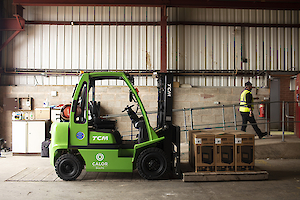 BioLPG is a renewable and sustainable fuel made from a blend of waste, residues, and sustainably sourced materials. As a biopropane, BioLPG is chemically identical to LPG and is compatible with all LPG products and has absolutely no compromise on performance, so it’s as effective as LPG, while helping businesses meet the carbon emission targets. Also, it is International Sustainability and Carbon Certification scheme approved[3].
Legislation designed to tackle air pollution will have the biggest impact on businesses currently using diesel forklift trucks, especially those that are operating with older models. But contrary to common belief, going electric is not the only option. With Calor’s BioLPG now available on the market, logistics and warehousing operators can take advantage of the power, operational efficiencies and carbon reduction offered by LPG forklift trucks.
Calor in action
Materials handling suppliers Carrylift Group is one FLT business furthering its commitment to support customers with reducing carbon emissions by using Calor’s BioLPG across its extensive short-term hire fleet and to end users with direct supply. Sean Roberts, Group Commercial Manager at Carrylift, tells us why Calor’s BioLPG was the smarter choice as it provides companies ‘with the means to reduce their carbon emissions and the opportunity to display in their reception a green certificate.’
Calor’s BioLPG is now being used across Carrylift’s 1,000 short term rental FLTs.
Get in touch today
If you’re currently using diesel or electric to power your FLT fleet and you’d like to find out more about Calor’s LPG and BioLPG, please visit Calor’s website. Or, please give us a call on 0800 085 5035 and one of our energy specialists will be happy to help.
1 LPG for Forklift Trucks, Atlantic Consulting 2018
2 Millbrook Test Report, No. 10/1403