Celebrating 50 years in existence, Narrow Aisle offers five key points on how the articulated forklift truck can make an essential contribution to reducing warehouse costs and increasing order picking efficiency
Working correctly, warehouses and distribution centres will be a company’s secret weapon in dealing with the turbulence that seems to be a perpetual part of today’s economic landscape. They are bastions of efficient throughput, keeping calm and carrying on delivering the goods.
An essential part of maintaining this efficiency is having the right warehouse design. Warehouse density, aisle optimisation and fleet rationalisation are becoming strategic levers to address the challenges of rising real estate costs, labour shortages and pressure to increase throughput without expanding footprint.
This means optimising footprints with high-density racking, narrower aisles and vertical storage solutions. Introducing new innovative, versatile, efficient and space-saving material handling solutions to improve productivity for order picking will create a much more efficient and cost-effective operation – often with a very attractive payback period.
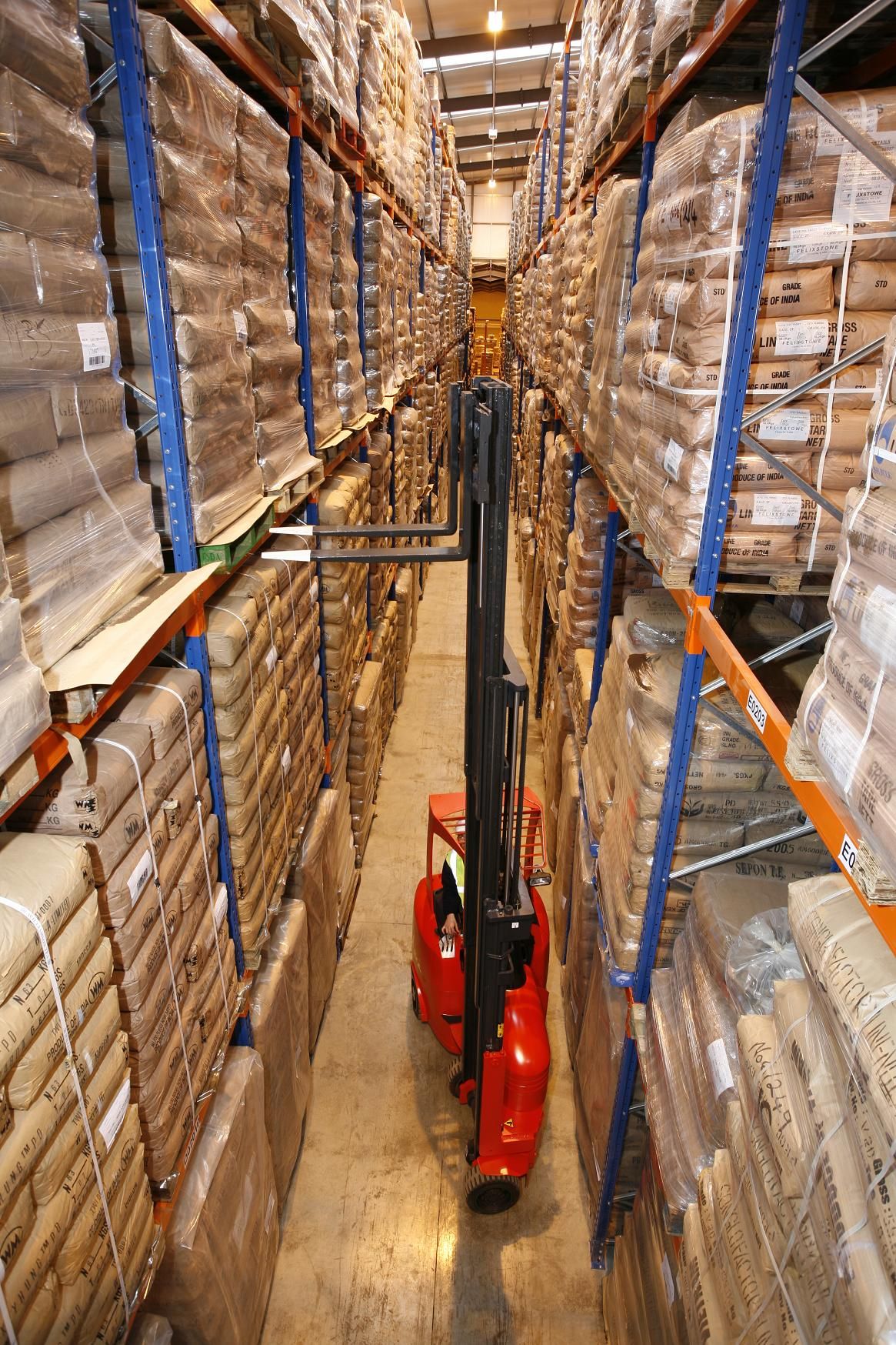
One of the more popular solutions of this kind is using an articulated forklift truck within a warehouse with narrow aisle racking. This truck’s superior manoeuvrability in confined spaces enables denser storage and optimised operational workflows. Celebrating 50 years in operation, Narrow Aisle pioneered the market for these trucks with the Flexi and its core attributes have won converts among users throughout its half-century existence, while continually evolving design and new variants have seen its popularity expand in sectors including third party logistics (3PL) operators, retailers and manufacturers among others, and in markets across the globe.
As companies reassess their handling operations to achieve greater efficiencies, they will want to consider solutions that demonstrate a good return on investment and will provide a versatile competitive edge. Here are the top five reasons why articulated forklift truck concept remains an essential part of efficient, productive and safe warehouses:
- Space efficiency
Narrow aisle racking allows more stock on a smaller footprint, so SKU lines can be stored closer together to reduce order picking times and provide faster delivery. SKU variety is not only about size and weight but also throughput – ie, a combination of fast, medium and slow-moving items. Quite often in larger warehouses this requires an order to be fulfilled by picking items located in several different areas – typically small items, fast movers and slow movers. Often, this will include narrow aisle pallet racking either for replenishment stock for fast movers and small items or simply house general goods.
The articulated forklift truck concept has enjoyed considerable success due to a design that allows it to operate in a narrower space than needed by a conventional reach or counterbalance truck to turn into a pallet position. This means that within any kind of storage facility, aisle widths can be reduced and more racking bays introduced.
- Versatility
Able to handle a range of load types, the versatility of an articulated forklift truck inside a warehouse is further accentuated by its ability to be equally comfortable operating outside. This means that the truck can collect incoming pallet loads from the goods-in area and take them directly to the location in the racking. It can also take pallets from their racking locations and transport them to a waiting delivery vehicle in the yard. This eliminates the need to operate a two-truck system, typified by a counterbalanced machine working outside to transport pallets inside a warehouse to feed a man-up VNA (Very Narrow Aisle) or reach truck – and vice versa. Eliminating this kind of double handling by switching to a predominantly articulated forklift fleet can produce financial savings of up to 50 per cent.
VNA storage systems have, historically, required dedicated wire- or rail-guided materials handling equipment. The price of guided trucks reflects their sophisticated design and performance capabilities but has prevented many companies who would benefit from VNA storage from adopting the technology. Furthermore on the versatility front, unlike the operation of wire-guided narrow aisle trucks, a fleet of articulated lift trucks can be easily reorganised to meet the needs of business.
In general, VNA warehouses need to be designed with sufficient VNA trucks to handle peak volumes, because it is difficult and expensive to hire in this kind of truck. Using a Flexi truck to increase storage volumes and throughput, however, allows additional trucks to be introduced to an operation with the minimum of fuss to support peak/seasonal demands. Short-term hiring a Flexi is as easy and cost effective as hiring a conventional forklift.
- Picking productivity
The emphasis on driving costs out of the process means that order picking staff often work harder and faster and are, therefore, more prone to the risk of mis-picks. The rectifying costs can be significant – reputationally, as well as in financial terms. So, picking accuracy is always a key driver in the development of any order picking operation.
In addition to e-commerce, retailers want less inventory in their stores so there is the need to break-bulk and arrange ground level picking of single items. At the same time ranges are growing and customers must pick from more SKUs so they need more low-level locations to pick from for efficiency but must save increasingly expensive warehouse space.
Articulated lift trucks can play a key role where customer order picking is undertaken from palletised loads placed at ground level within pallet racking, with the reserve or bulk stock stored above. Also, An ability to operate in narrow aisles reduces the travel distance between racks.
- Reliability
The cost implications of equipment downtime reducing throughputs can be mitigated using reliable, standardised industrial trucks that are proven to work through multi-shift applications with very high levels of up-time. Over many years, the Flexi articulated lift trucks have earned a reputation for reliable operation and its low maintenance costs result in low rental costs. Having a ‘common parts’ strategy, using the same proven, mostly European component parts, ensures long term reliability and low cost of ownership.
In addition, the useability of the Flexi is a significant operational advantage. A common reaction of Flexi truck drivers, having only previously ever operated reach trucks and often never seen an articulated truck, is they are converted within a few days.
- Safety
While the benefits of condensing storage aisles to their minimum width are obvious, successful warehousing must strike a balance between productivity and safety – particularly where order picking personnel are working in the aisles at the same time as trucks.
The use of warehouse trucks such as Man-Up Combis and VNA Turret trucks can compromise order picking efficiency and health and safety within warehouses where low-level order picking takes place. For example, the elevated position a Man-up Combi VNA truck might lift the operator 10 metres in the air, but if you have someone in the same aisle order picking at ground level there is always the risk of the Combi operator not seeing the order picker below. Using articulated trucks overcomes these safety concerns. Because of its design, the Flexi is perfectly suited to working in narrower aisles alongside order picking staff without creating a health and safety issue.
Whether your company is a SME or a global corporation, it is all too easy to overlook the importance of optimising the warehouse function. However, its efficient operation remains fundamental to the successful implementation of any company’s supply chain strategy – and updating intralogistics solutions can make significant operational cost savings in double quick time.
Articulated lift trucks can be an important part of this transformation process, bringing about greater intralogistics efficiency and reducing operating costs. The Flexi range continues to evolve with new models introduced to meet the requirements of customers operating in hugely diverse industries. On the fleet management side, the integration of Artificial Intelligence (AI) and the Internet of Things (IoT) is leading to more sophisticated fleet management, predictive maintenance, and autonomous operation capabilities.
With more than 15,000 units sold to companies operating in some 75 countries around the world, the Flexi has proved its worth in the most efficient warehouses over the last 50 years and continues to provide answers to the challenges of today and tomorrow.
For more information, visit www.flexi.co.uk
Visit our NEWS page for more industry updates