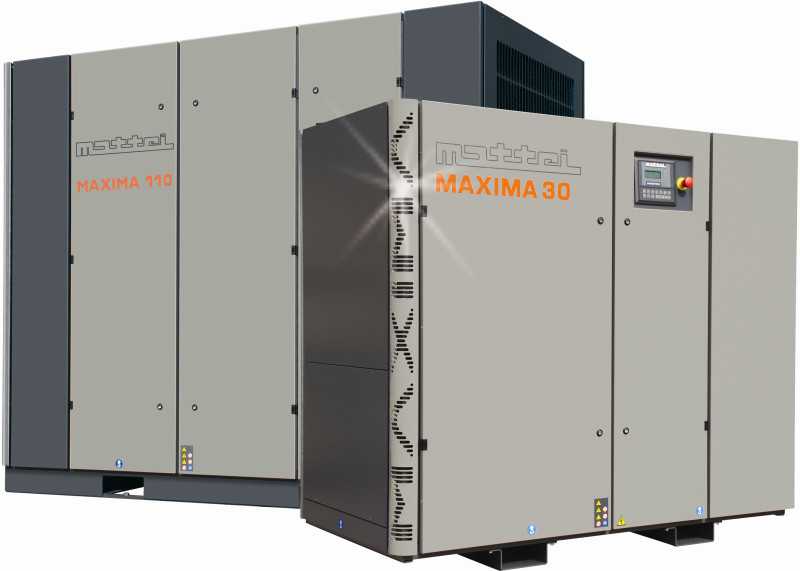
 Leading rotary vane compressor manufacturer Mattei is committed to helping customers reduce their energy usage through a better understanding of their compressed air systems and their air demands.
With compressed air being the UK’s fourth utility, electrically driven compressors are a major user of energy; in the industrial sector they account for around 10 per cent of electricity costs. Unfortunately, compressed air systems don’t always run to their best potential, but Mattei strongly believes that if users analysed and assessed their systems more closely then efficiency levels could be vastly improved.
 The key way to assess a compressed air system is through data logging. This evaluates compressed air needs and the efficiency of a system by recording and measuring air consumption profiles over a seven-day period. This is usually followed by discussions to identify any unusual patterns or planned process changes.
As Andy Jones, general manager of Mattei, says: “It’s essential for businesses to understand how much compressed air they use, how much it costs them and if their compressors are appropriate for their production processes – but it’s likely the vast majority don’t. Recently we found that one company running a 75kW compressor could actually fulfil its compressed air requirements with a 45kW machine, with estimated savings being in the region of £10,000 a year.
“And understanding a compressor’s electrical consumption is vital – it must be remembered that the initial purchase price actually makes up a very small part of the total lifetime costs of a compressor. Some businesses have a misconception that compressed air is ‘free’ once they have invested in the equipment, but the main cost will always be the energy required to produce the compressed air.
“The electricity consumed during operation over a five-year period actually accounts for around 75 per cent of the total cost of ownership, including the initial capital outlay for the compressor.
“Data logging and energy audits should be carried out on a regular basis, but always before a new compressor is installed. In most cases, replacing an outdated compressor with a modern equivalent will result in energy savings – however, carrying out an initial assessment, rather than simply replacing like-for-like, will ensure that optimum savings are realised.”
Mattei anticipates that the forthcoming ISO 11011 standard, Compressed air – Energy efficiency – Assessment, due to be implemented in 2013, will encourage end users to assess their compressed air systems and subsequently take actions to reduce their energy use. It contains a framework for assessment and auditing, so it should also standardise the energy audits offered by compressed air companies.
Andy Jones says: “Though voluntary, we hope that compressed air users will see the value of ISO 11011. Importantly, the standard will help them establish how much compressed air they use, and how much it costs them to generate it. It should deliver sustainable results – ultimately saving energy and reducing carbon emissions.
“It will also regularise energy audits, so we’ll all be offering similar advice and carrying out the same assessment/auditing procedures on a level playing field – which can only be of benefit to the end user.”
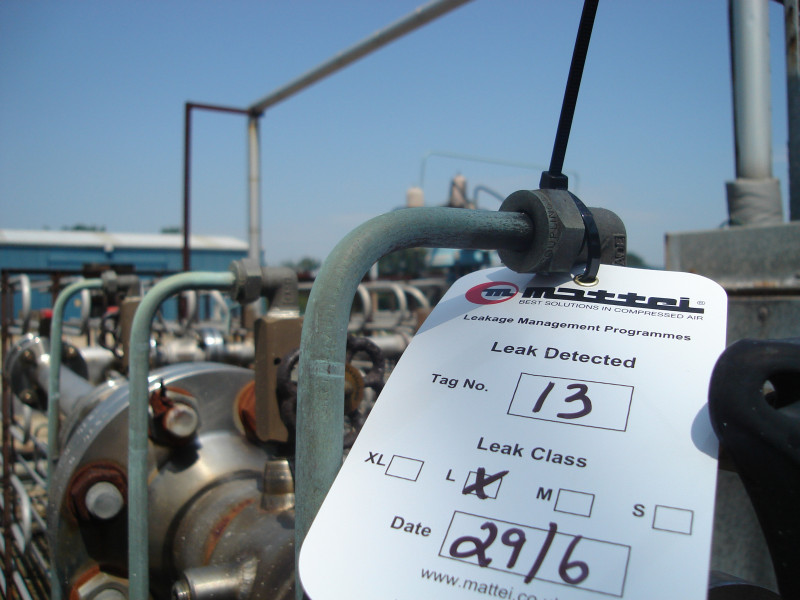
Mattei also strongly recommends that compressed air users invest in leak detection surveys on a regular basis. It is estimated that the average compressed air system loses 30 per cent of the air it produces through leaks in the system, but in some cases Mattei has found leakage levels as high as 67 per cent.
The Carbon Trust suggests that air escaping through a single 3mm hole could cost a business around £700 per year in energy costs – but a typical compressed air system will have more than just one leak; Mattei often find systems with anywhere between 150 and 300. For a company that uses 50m3 of compressed air per minute, this could equate to potential savings of around £63,000 if the leaks were repaired.
Leaks are simple to identify and rectify, and it’s cost-effective; the average cost of a Mattei leak detection survey is less than 10 per cent of the overall leakage costs. Typically an 800 per cent return on investment is delivered, and customers will generally see a payback within three to six months. Mattei has a dedicated leakage management microsite (www.leakagemanagement.co.uk), which outlines the services the company offers.
Andy Jones says: “Leak detection surveys should ideally be done on an annual basis, and definitely before a new compressor is installed. It would be entirely false economy to install a new, energy efficient compressor without firstly fixing any leaks that might exist – and what’s more, the case for replacing the machine might be based on misleading figures. It could even be revealed that a new compressor isn’t needed at all.”
As well as offering a range of energy efficient compressors, Mattei aims to raise awareness about related, cost-effective services that could improve efficiency without the need to finance a new compressor. For further information visit www.mattei.co.uk or call 01789 450577.