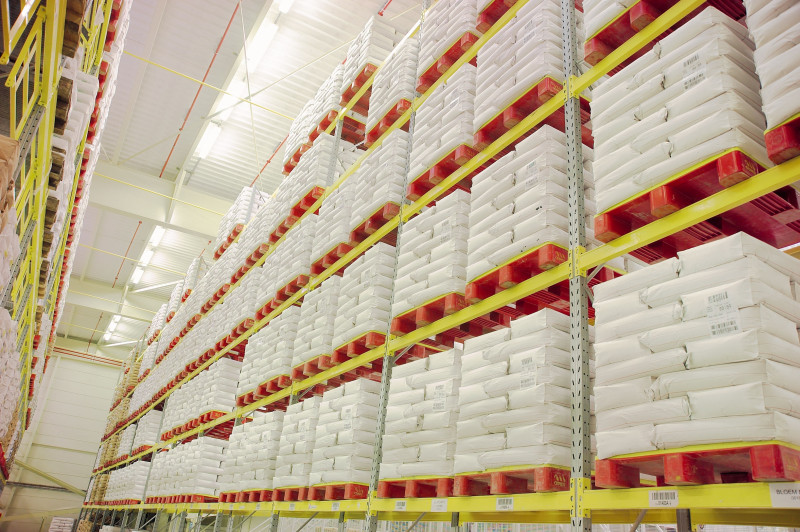
 Are the pallets you’re using the safest and most suitable pallets for your logistics operation? Jim Hardisty, Managing Director of Goplasticpallets.com says poorly chosen pallets could compromise safety if they are not used correctly and lead to unnecessary costs.
In the UK materials handling and logistics sector, there is an average of 43 injuries per week, 11 of them serious. There are lots of safety hazards employees need to be aware of – handling and storing pallets being one of them.
 Despite all the time and huge financial investment that goes into selecting the safest and most efficient racking, computer systems and handling equipment to run a successful logistics operation, some companies are compromising all their effort by using second-hand wooden pallets.
These second-hand wooden pallets, which are likely to have been used several times before, could be carrying any number of contaminants. But, contamination aside, how can you be sure that your second-hand wooden pallet is capable of bearing the weight of your goods? The truth is, you can’t.
Pallet load considerations
If you ask a technical operative in any modern warehouse what the capacity of the racking system is, he’ll be able to define it based on the position of the pallet, the span of the beams and the drive-in bays; he’ll know that the beams are designed to support a specific number of kilograms on so many pallets per bay, and that the end supports have been bolted down using a particular bolt with a defined length and thread. Ask the same technical operative what the capacity of the wooden pallet being used on the racking system is, and he won’t be able to tell you as, whether new or reused, wooden pallets do not have guaranteed loading capacities.
The reason for this is that the strength of timber varies. Make 100 wooden pallets one month and test them and they might all have the same loading capacity, but make another 100 pallets a few months later and there is no telling how the capacity of these pallets might differ.
Pallet selection
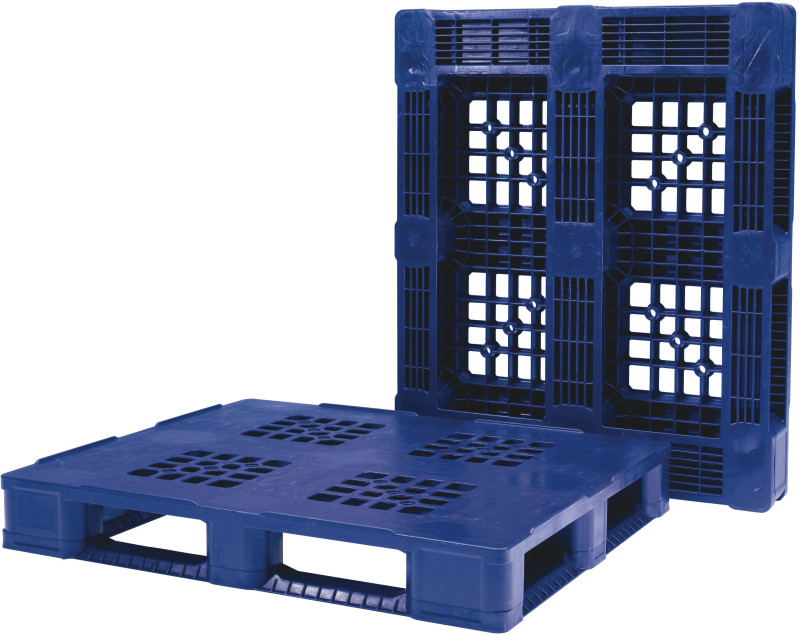
Choosing pallets that come with clear guidance on pallet loading capacities, like plastic pallets, not only offers companies the reassurance that their products are being stored and handled in the safest possible way, but can also avoid costly incidents.
A major UK supermarket chain recently trialled some of our plastic pallets in their automated storage system after a wooden pallet racked 10-racks high broke causing a pyramid effect that destroyed a huge volume of product and cost £2.5m to resolve. Thankfully, no one was injured but, had staff been present in the warehouse at the time, the incident could have been life-threatening.
Pallet safety guidance
The British Standard ISO 8611 has been central to pallet testing for plastic, steel and timber pallets for many years and major pallet rental pools consider the deck bending test the most valuable for assessing pallet safety.
However, the Health & Safety Executive also offers useful guidance on pallet safety in its Guide to Health and Safety in Warehousing and Storage (HSG76) which is much simpler to understand than the comprehensive BS ISO 8611:2011 Pallets for material handling – Flat pallets – Performance requirements and selection of tests.
The HSG76 was primarily written to help reduce injuries and ill health in warehouses in order to achieve the Government’s injury reduction targets for UK workplaces. In defining the safe use of pallets, the guide states:
“Flat timber pallets form an essential part of many mechanical handling systems in warehouses. Accidents directly attributable to these type of pallets usually arise from six main sources: poor design; poor construction; the use of a pallet which is unsuitable for a particular load; the continued use of a damaged pallet; bad handling; or the use of a pallet which is unsuitable for a particular racking system.”
Plastic pallets – the benefits
By using plastic pallets, companies can eliminate virtually all of these safety hazards. Firstly, they are moulded under extreme pressure which produces a high quality product and ensures the consistent dimensional accuracy and loading capacity of each plastic pallet – particularly beneficial in automated systems, as they won’t twist or get stuck.
Secondly, all the pallets we supply have been tested in accordance with the BS ISO 8611:2011 and come with clear guidance on pallet loading capacities for static, dynamic and racking loads, which help operatives choose the right plastic pallet for a particular load.
Thirdly, plastic pallets are strong and durable and less vulnerable to damage than wooden pallets. In fact a standard plastic pallet has a lifespan of up to ten years, offering an excellent return on investment, and once it reaches the end of its working life, the pallet can be recycled to produce new plastic products.
Finally, as plastic pallets have no nails, sharp edges or splinters and there is no risk of loose component parts breaking free under manual lifting conditions, they are far less likely to damage product packaging or cause injury to operatives.
T: 01323 744057