
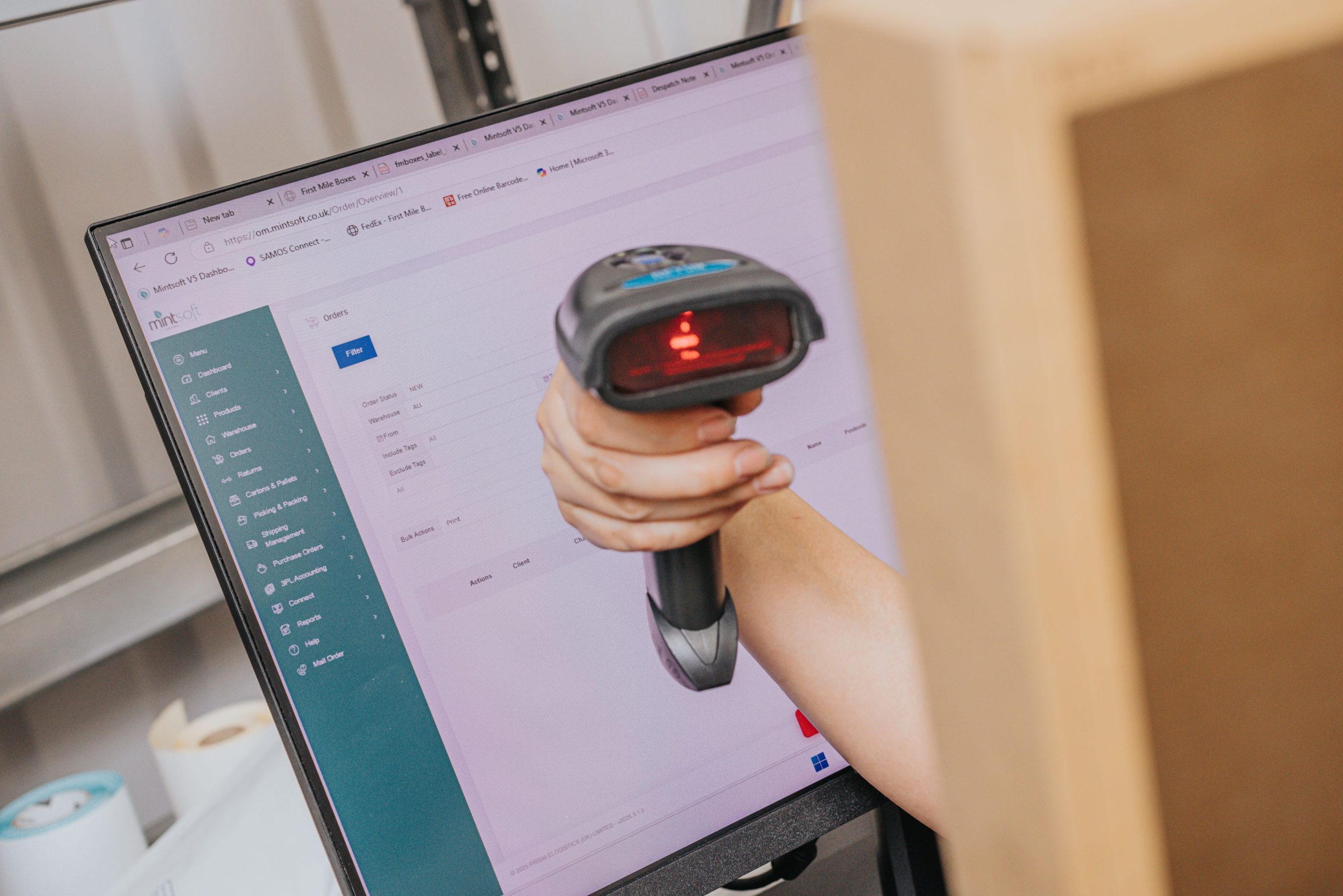
When we consider the field of logistics, it’s often the bigger and more tangible aspects which spring to mind; transport fleets, warehouse footprint and packaging lines, for example
Fulfilment, by contrast, is often taken for granted, a corner of the supply chain where orders are quietly picked, packed and dispatched, without too much scrutiny.
However, with the rise of eCommerce the importance of fulfilment has hugely increased. For brands building a following online, the way a product arrives with the customer is crucial. Consumers have become used to next-day delivery of neatly packed products and the arrival of an order which is damaged, incorrectly packed, badly presented or far past its expected delivery date can cause serious damage to trust and credibility.
For manufacturers, challenger brands and established businesses alike, fulfilment has progressed from back-office function to a determining factor in customer experience and business growth.
Supporting operations
Whilst larger businesses may already have warehousing and logistics operations in place, there are several scenarios in which a reliable outsourcing partner can be a vital resource. Not least of these is the launch of direct-to-consumer channels as a result of the eCommerce boom, requiring manufacturers to manage orders which sit outside of standard operations. Other reasons could include management of seasonal peaks, complex mixed SKU builds, special promotions and more.
In these cases, outsourcing fulfilment provides flexibility without disruption. Rather than stretching internal teams or reconfiguring existing warehouse processes, brands can use specialist fulfilment support for specific channels, campaigns or product ranges. For FMCG brands in particular, the benefit of giving fulfilment to a third party is that the weight of retailer and consumer expectations is handled elsewhere, a specific advantage for sectors like food and beverage or healthcare, where expectations run especially high.
It’s worth noting that fulfilment partners handle returns as well as deliveries. For brands shipping large order volumes, managing the processing and storage of returned products can absorb valuable time and resources, including physical warehouse space. By choosing an experienced fulfilment provider, workflows can be developed to handle dispatch and return at scale, a particular advantage for those shipping fragile items, mixed orders, time-sensitive products or any other components which could present a challenge on outbound or return shipping.
A further consideration is the breadth of capability now available via fulfilment partners. Beyond picking, packing and shipping, the rise in demand for fulfilment has led to the expansion of services in this market. Along with standard services, fulfilment can now handle aspects like design and build of display units, packaging rework and sleeving, management of multi-channel distribution and managing compliance for complex products like excise goods.
Building a Business
For new businesses, fulfilment is often an area where savings can be made early on. Many founders begin by handling fulfilment in-house, in small storage units or corners of existing premises, keeping costs down and allowing total visibility and control at a time when every order counts. However, as volumes increase, this can quickly cause a bottleneck, risking brand reputation at a critical phase of growth.
While the practical risks associated with order backlogs are obvious, the hidden cost is time. For a business owner still trying to pick, pack and dispatch themselves, hours that could be spent on building the brand or networking instead go on firefighting operational problems. At a certain point, the savings offered by managing fulfilment internally are vastly outweighed by the time investment required to keep order management on track.
Outsourcing fulfilment gives challenger brands use of established infrastructure and systems without requiring long-term financial commitment. But perhaps as importantly, it also offers access to expertise. Fulfilment can be highly complex, from stock management considerations, to labelling requirements, traceability and beyond; there is a lot to learn. An experienced provider can support these elements as well as providing advice on critical decisions such as packaging format and distribution channels, providing the benefit of experience at key moments.
Competitive advantage
In today’s world, where next-day delivery is the standard, and orders happen at the click of a button, effective fulfilment is no longer a basic function, but a competitive advantage for those who get it right. Ultimately, fulfilment is the place where brand promise meets operational reality, and if orders are not delivered to the standard and at the pace the consumer expects it can have real repercussions both for established and growing businesses. For brands looking to grow sustainably whilst maintaining a reputation for quality, understanding the impact of effective fulfilment, and how outsourcing can support that, must be a serious consideration.
By Ian Wright, Managing Director, Prism eLogistics (UK) Ltd
For more information, visit www.prismelogistics.co.uk


