Maximising efficiency is vital for manufacturers, and that includes making sure they have the right amount of space, in the right place, at the right time
Traditionally, that space was created by extending an existing facility or investing in a permanent building. Increasingly, however, industrial businesses are taking a different approach and choosing to rent temporary buildings instead of committing capital to construction projects.
But the shift is about more than just reducing costs, and in this article, we’ll explore some of the other reasons why renting is becoming an ever more popular option.
1.The challenge of predicting future space requirements
One of the biggest challenges facing manufacturers is knowing how much space they will need in the future.
A business could secure a major contract, increase production volumes or need additional storage capacity, virtually overnight. Equally, customer demand might drop, product lines can change and operational priorities can shift just as quickly.
Making a long-term investment based on today’s requirements can therefore be difficult; a building that feels like the right size today may become too small in a few years’ time. Alternatively, a permanent extension could leave a business paying to maintain space that is no longer fully utilised.
That’s why, for many manufacturers, renting provides a practical way to create additional capacity when it’s needed, without the pressure of trying to predict future requirements.
Our rented buildings can be purchased at any point during the rental period, with the future purchase price provided upfront. This allows businesses to install the building and gain capacity now and decide later whether ownership is the right option.
2.Keeping capital focused on the business
Growing businesses may need to invest in machinery, automation, technology, recruitment or stock to keep their business thriving, and when this is the case, tying up significant amounts of capital in a building project is not always the most attractive option.
Renting allows manufacturers to access the space they need while keeping capital available for other things that directly support productivity and growth.
This can be particularly valuable in sectors where margins are tight and maintaining cash flow remains a priority.
3.Creating space when it’s needed
Extra space is not always a permanent requirement.
A manufacturer may need additional storage during a period of growth, a dedicated packing area to support a specific contract or overflow warehousing while changes are made to an existing facility.
In these situations, renting allows businesses to match space to demand. Instead of expanding permanently and maintaining oversized facilities year-round, businesses can introduce additional capacity only when it is needed, even if that’s just for a few months.
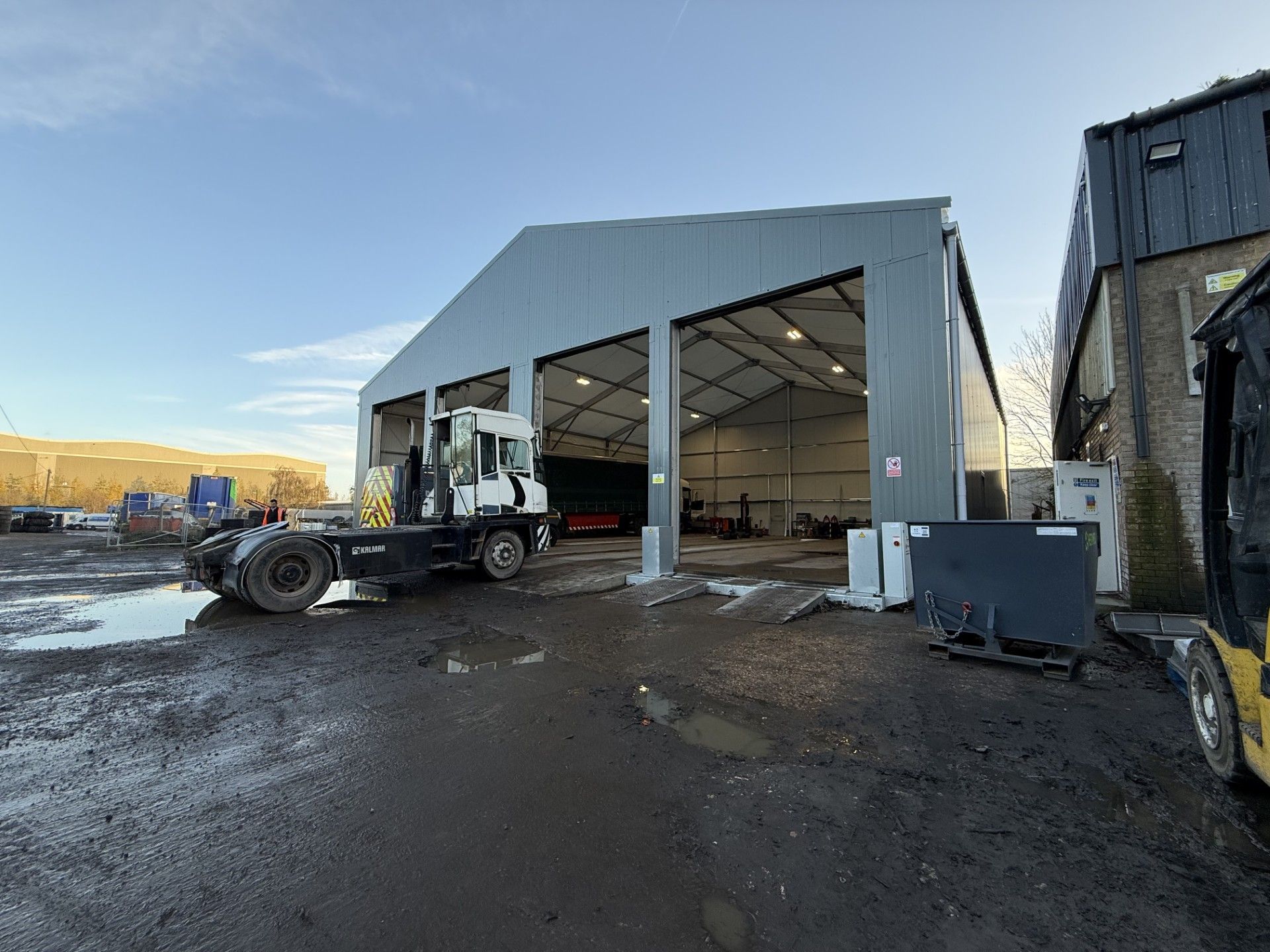
Renting doesn’t mean compromising on the building itself either. We offer the same range of door options, cladding, insulation, lighting and internal features whether a building is rented or purchased, allowing the space to be tailored to specific requirements.
4.Supporting growth without disrupting operations
Adding a permanent building can involve lengthy planning processes, significant groundworks and disruption to existing operations that can last for months. For businesses already operating close to capacity, the additional waiting time and disruption is not always practical. Temporary buildings offer a faster alternative.
PVC roof structures, for example, can often be installed directly onto existing surfaces without the need for extensive ground preparation. This means buildings can frequently be installed and operational within weeks, allowing manufacturers to respond quickly when additional capacity is required rather than allowing backlogs or bottlenecks to develop.
Rental buildings can also be positioned around existing facilities, helping businesses make use of available space without major changes to the layout of the site.
Renting as a practical business decision
With rising costs and increasing pressure to operate efficiently, flexibility is becoming more important. As a result, decisions about additional space no longer centre around whether it’s needed, but how it can be introduced in a way that supports the wider needs of the business.
Whether that’s preserving capital for alternative investment, responding to a short-term increase in demand or creating capacity while longer-term plans are evaluated, renting allows businesses to match space more closely to their actual requirements, remaining efficient, responsive and ready for growth.
For more information, visit www.smart-space.co.uk
Visit our NEWS page for more industry updates