 The need to further enhance engineering efficiency is being served by many innovations in processes and technology, enabling manufacturers to reduce waste while still increasing productivity, says ERIKS.
Sustainability and innovation are vital in today’s engineering industry and it’s solutions that blend both of these elements that best meet the challenges of the modern world. Building sustainability is not just good for the environment; it’s a powerful differentiator in the marketplace. The need to be more energy efficient and increase profits goes hand in hand with the growing change in the attitudes towards more ethical business operations.
Plant operators are keen to take advantage of these benefits in the current economic climate but when it comes to deciding whether to repair or replace motors the variables can be so numerous that making an accurate calculation is often a daunting prospect. The decision as to whether to maintain or replace a motor can also be clouded by emotional or ‘gut’ feelings about what might be the best route to take.
The easiest option has often been to repair the current motor, the view being that this will probably demand the least headaches and upheaval, not to mention the fact that a repair is frequently thought to be cheaper than a replacement. If you are running motors frequently, this is unlikely to be the case; however, in some situations, the decision to take the repair option, arrived at through simple gut instinct, can be the best. Even so, it is not an objective decision put to the test by calculation; it is a haphazard choice that may have prevented the plant from making long-term efficiency and cost gains by exploring other possibilities. For while maintaining an existing motor is likely to be cheaper, in the short term this consideration has little to do with Total Cost of Ownership.
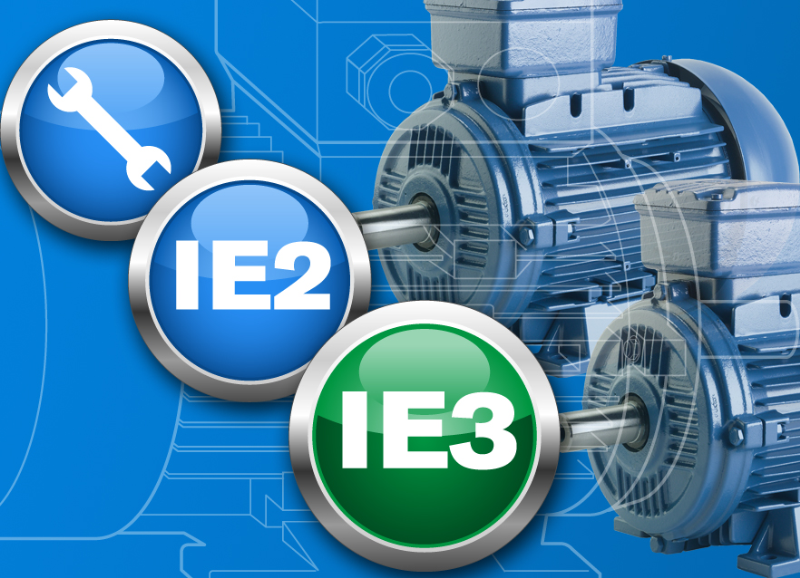 ERIKS has developed an extremely effective online tool that enables engineers to make an objective, cost-effective decision when repairing or replacing a motor because it works out the best option based on total cost of ownership, demonstrating ERIKS’ unbiased repair and replace capabilities. The ERIKS Online TCO Calculator uses data relating to your current motor to calculate key statistics, such as annual running cost, carbon footprint, energy usage in kilowatt hours, and so on. The user can then view the total cost of ownership for the year, or for fifteen years, or any period of years in between. The results provided by the calculator will list and compare the cost of repairing and running your existing motor, replacing it with a standard IE2 motor, or replacing it with an energy-efficient IE3 motor. The TCO even includes the Enhanced Capital Allowance claim value and the end-of-life scrap value. Supporting such an unbiased decision may not be in the interest of other suppliers who do not both repair and replace motors. However, ERIKS believes that neutrality in choosing between repair or replace options is key to making the most cost-effective decision. The demo version of the ERIKS Online TCO Calculator is currently available here: http://motordemo.eriks.co.uk, with the full version being offered to customers with a motor management contract, with all their personal specific information pre-loaded onto the tool.
Exercising greater control over energy and providing only the degree that is needed is also enabled by the use of variable-speed drives, which allow motors to run at slower speeds when demand from the system is low, as opposed to running continuously at full speed. Substantial savings can be made by using variable speed drive, which will not only save energy but also reduce shock loading on belts with features such as ‘soft start’, minimising both maintenance and operating costs. For example, a variable speed drive integrated with a hydraulic pump enables the pump to be switched into idle mode, which greatly improves efficiency and prevents the unnecessary energy waste caused by running the pump continuously. This kind of improved motor control brings further advantages in that productivity and quality is easier to manage, which means less scrap and fewer of the maintenance problems that can be caused by wear and tear.
So there are plenty of opportunities out there to enhance engineering efficiency and reduce waste while still increasing productivity by integrating environmentally sustainable products and systems into your operations.
For further information, please contact: Robyn Bradley, Marketing Executive, ERIKS UK
T: +44 (0)121 508 6219
M: +44(0)7740 452743