
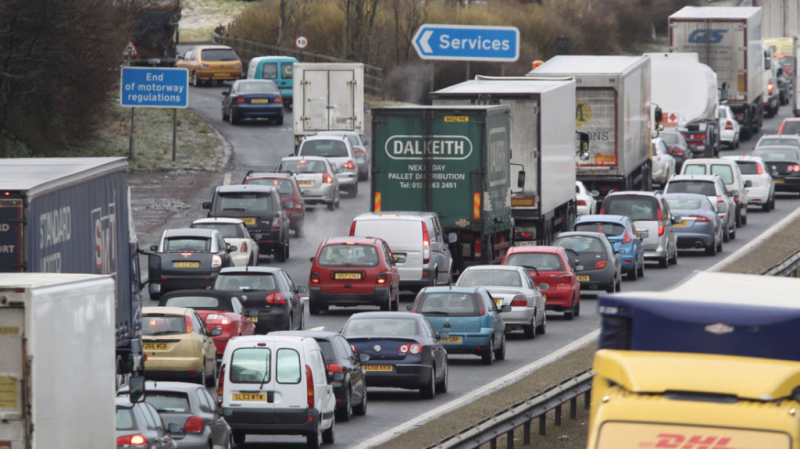
 The UK needs to create a modern Clean Air Act, equivalent to the one produced in the 1950s in response to London’s Great Smog, in order reduce harmful emissions across the UK, according to a new report by the Institution of Mechanical Engineers.
With air pollution responsible for one in ten of all deaths globally, the report calls for urgent action to tackle the damage to health which these emissions can cause. Health problems range from slowing the proper development of children’s lungs through to respiratory and cardiovascular diseases among the elderly.
The report makes a number of recommendations, including for the introduction of a coherent national scheme to monitor emissions from different modes of transport so that informed targets can be set, and for incentives to be introduced to encourage freight deliveries outside of peak hours.
The Clean Air Act needs to set out ways to help the 71 per cent of local authorities that missed their 2017 air quality targets. It must also have a broad scope that addresses emissions from across all the UK’s transport modes. The UK must assess emerging technologies for carbon emissions throughout the technology’s entire lifecycle, including the procurement of parts and fuel. Electric vehicles, which produce lower emissions, encounter challenges both at the start of production of their battery cells and at the end of life, owing to issues such as the economic viability of battery recycling.
Philippa Oldham, lead author of the report and member of the Institution of Mechanical Engineers, said: “Individuals breathe in 20kg of air every day and because we can’t see it, we don’t know about the harmful particles it contains.
“While much of the media focus is on our capital, it is worth noting that this is a serious problem that affects us all. Different communities will require their own solutions; for example, in cities outside London the proportion of public transport is lower, so the proportion of emissions from diesel and petrol cars is greater. In Manchester, 43 per cent of emissions come from cars and just 11 per cent from buses.
“Technology has its part to play in addressing the problem, but there is a role and responsibility for individuals too.
“Back in the 1950s, doctors kick-started a national movement on the risks of smoking; there is a need to start doing the same with air quality, to encourage people to drive less and use public transport, walk and cycle more.”
The Breath of fresh air: new solutions to reduce transport emissions report recommends that:
1. Government introduce a national monitoring system, across the different types of transport, recording all types of pollution, to create a coherent picture against which national targets can be set.
2. Government to incentivise cleaner technologies and encourage the phase-out of legacy vehicles with poor emissions record across the network (for example diesel cars and trains).
3. Government to consider incentivising freight and logistic operators to make deliveries outside peak hours.
4. Conduct a series of trials on existing diesel railway rolling stock, new bi-mode trains and in major stations, to understand the pollutant exposure on commuters and railway workers.
5. Trials to understand the impact on the individual of exposure to pollutants in overground and underground railway stations and bus stations etc.
6. A campaign that informs the public of the health benefits of switching to lower-emission modes of transport.
7. Government to work with Network Rail to deliver the complete electrification of the main rail lines in key areas.
8. Fund research through the Clean Air Fund and Innovate UK to create programmes to clean up various transport modes.


