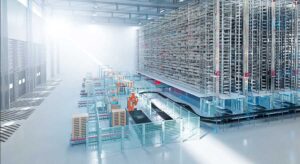
 Intralogistics, which refers to the movement and storage of goods within a facility, has become a critical component of modern supply chain management. The increasing complexity of supply chains, rising labour costs, and growing demand for faster and more accurate order fulfilment have prompted businesses to turn to automation to optimize intralogistics operations. One of the most notable advancements in intralogistics automation has been the use of mobile robots. In this article, we will explore why robots are being used in intralogistics and how mobile robots are advancing processes in logistics.
Why are robots being used in intralogistics?
The use of robots in intralogistics provides several benefits over traditional manual operations, including increased efficiency, accuracy, and safety. Let’s take a closer look at each of these benefits:
- Increased efficiency: Mobile robots can work around the clock without getting tired, reducing the time required to move goods from one place to another. Unlike humans, robots can perform repetitive tasks without making errors, leading to a more consistent and efficient operation. For instance, robots can sort and pick items faster and more accurately than humans, which leads to a more efficient intralogistics operation.
- Increased accuracy: Robots can perform tasks with a high degree of accuracy, reducing the risk of errors in the intralogistics operation. This is especially important in applications such as order picking and inventory management, where even a small error can lead to a significant disruption in the supply chain. By using robots, businesses can ensure that orders are picked accurately and inventory levels are maintained correctly.
- Improved safety: Intralogistics operations can be hazardous for workers due to the use of heavy machinery, forklifts, and other equipment. By using robots, businesses can reduce the risk of workplace injuries and accidents. Additionally, robots can work in hazardous environments, such as freezers or areas with high levels of dust or fumes, where human workers may be at risk.
How are mobile robots advancing processes in logistics?
- Mobile robots have become increasingly advanced in recent years, thanks to advancements in technology such as machine learning, computer vision, and artificial intelligence. Let’s explore some of the ways in which mobile robots are advancing processes in logistics:
- Autonomous navigation: Mobile robots can navigate autonomously, using sensors and cameras to detect obstacles and plan their routes. This enables them to move goods around a facility without the need for human intervention, reducing the time and effort required for intralogistics operations.
- Collaborative robots: Collaborative robots, also known as cobots, are designed to work alongside human workers, performing tasks that are repetitive, dangerous, or require a high degree of accuracy. Cobots are equipped with sensors that enable them to detect the presence of human workers and adjust their movements accordingly, ensuring a safe working environment.
- Increased flexibility: Mobile robots can be easily reprogrammed to perform different tasks, making them highly flexible in intralogistics operations. For example, a robot that is used for order picking during the day can be reprogrammed to perform inventory management tasks at night, providing businesses with increased flexibility in their operations.
- Real-time data: Mobile robots can provide real-time data on intralogistics operations, such as inventory levels, order status, and delivery times. This data can be used to optimize operations, identify bottlenecks, and make informed decisions about future intralogistics investments.
- Swarm intelligence: Mobile robots can be programmed to work together in a swarm, performing tasks such as order picking or inventory management in a coordinated manner. This approach can significantly increase the efficiency of intralogistics operations, as multiple robots can work together to complete tasks faster and more accurately than a single robot or human worker.
The adoption of robots in the logistics sector is help companies become more efficient, cost-effective, and competitive in the market, increasing operational capacity and meeting rising demand from a changing consumer dynamic. As there appears to be no let-up in the need for products, and a diverse range of, which is evolving constantly, the technology shall continue to change to meet this demand.